

David Attenborough at 100. What are we doing writing people off at 50?
11 May 2026 By Victoria Tomlinson
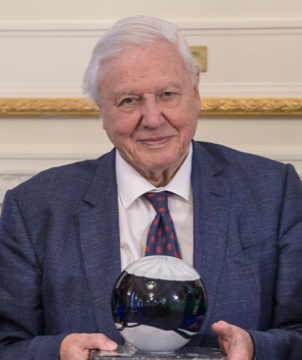
You cannot have missed it. The world stopped last week to celebrate David Attenborough’s 100th birthday. Children talking about how he made them love nature. Marine biologists and zoologists crediting him with their entire careers. A celebration at the Albert Hall. Plastered across billboards and even the King sending best wishes on behalf of ‘all of us’.
The kind of global outpouring that wasn’t about reaching the age of 100 – there are nearly a million people aged over 100 after all – but about his influence and how he has made a difference to the world.
And it is about what one person did with the time they had AFTER the age of 50.
Actually, after 70. Just look at the dates.
Attenborough began speaking openly about climate change with State of the Planet in 2000. He was 74. He followed that with The Truth about Climate Change in 2006 and Climate Change: The Facts in 2019. Blue Planet II, the programme widely credited with shifting global consciousness about plastic pollution, came out in 2017. He was 91.
His most influential decades were his eighth and ninth.
It is worth being clear about what he actually did. He wasn’t the producer or the cameraman – in many ways they were the heros of those TV programmes. What he brought was the ability to look at complex science and understand how to make it land with ordinary people. Decades of broadcasting had given him an instinct for what moves an audience. He knew how to frame a story. He was also, by all accounts, completely at ease with anyone — royalty, world leaders, scientists — not deferential, but an equal, which meant he could open doors and secure support that others couldn’t. The combination of experience, judgement and confidence that is accumulated over years.
So when employers routinely sideline people over 50, or assume that experience past a certain point becomes less relevant, what exactly are they imagining they are protecting themselves from?
Having said that, we have to take care when using ‘experience’. This week was also a reminder of how to get it badly wrong.
Following a difficult set of local election results, Sir Keir Starmer’s response was to bring in Baroness Harriet Harman and Gordon Brown as advisers.
But experience only helps if it is the right experience for the moment. Gordon Brown was one of the most experienced politicians in the country when the 2008 financial crisis hit. He was also Chancellor and then Prime Minister during the years of light-touch financial regulation that made the UK particularly vulnerable to it. While he always argued the crash was global and not of his making, countries with more disciplined financial management — Canada, Australia, India — came through it far less damaged. And Brown himself has admitted he was not suited to the communication demands of modern politics: poor at connecting with the public, uncomfortable with the personality-driven nature of contemporary leadership, prone to what his critics called dither and delay. The things Starmer is being criticised for now are precisely Brown’s weaknesses. Bringing him in to help with those things is a curious choice.
So the message is not simply “value experience.” It is “value the right experience, honestly assessed.” Neither the person offering it nor the person using it can afford to assume that years automatically translate into relevance.
But the overriding point stands. If Attenborough could begin his most influential work at 74 and sustain it for 26 years, what on earth are we doing when we write people off at 50?
Look at the photos from last week. He looked about 70. Upright, engaged, still curious. That is not an accident. He is purposely active, eats simple food and reduced the amount of meat and above all he has a sense of purpose in spades.
If you are turning 70 and wondering whether your best years are behind you, look at what Attenborough was doing at your age.
He was just getting started. YOU are just getting started! Your best years can still be ahead of you – if you want it.

Written by Victoria Tomlinson
Victoria Tomlinson is chief executive and founder of Next-Up. Next-Up supports employers with a range of services for directors, partners and employees to help them understand the impact of retirement on mental health and create a plan to use their skills and experience in new ways to ensure wellbeing. A key part of our role is to inspire people with ideas and contacts, beyond traditional expectations. A former director of EY, she is an international speaker on unretirement, personal branding and using LinkedIn strategically as well as on leadership and women on boards. She mentors chief executives and directors, start-up businesses and ex-offenders. Victoria is Honorary Teaching Fellow at Lancaster University and chaired an advisory board for University of Leeds.
